Palm Springs Mid-Century Styles: Homebuyer Guide
January 8, 2026
January 8, 2026
Love the clean lines, breezeblock, and indoor‑outdoor living you see in Palm Springs homes, but not sure what makes a house truly mid‑century? You are not alone. With so many look‑alike updates and historic originals on the market, it helps to know what to look for and how it affects value and care. This guide breaks down the key features, local variations, and smart due diligence so you can buy or sell with confidence. Let’s dive in.
Palm Springs is a national center of mid‑century modern architecture, often called Desert Modernism. Most homes date from the late 1940s through the 1960s and reflect simple forms, honest structure, and strong indoor‑outdoor connections. Local architects such as Albert Frey, E. Stewart Williams, William Krisel, Donald Wexler, and John Lautner shaped the look you see today.
You also find a large number of tract homes from the Alexander Construction Company. These homes delivered modern design to the mass market and still define many neighborhoods across the city.
A butterfly roof forms a V shape that slopes toward the center, creating a bold silhouette. It suits the desert by allowing high clerestory glass and deep overhangs for shade. The visual drama is real, but so is the need for reliable internal drainage and flashing.
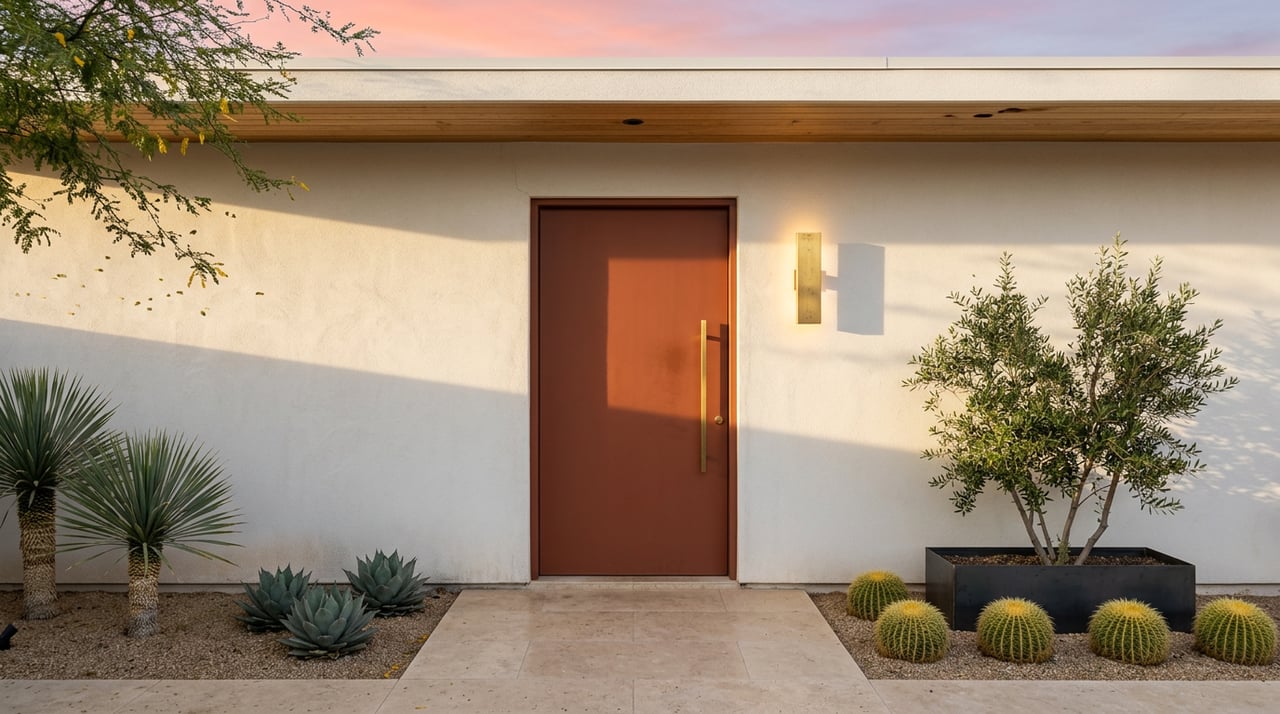
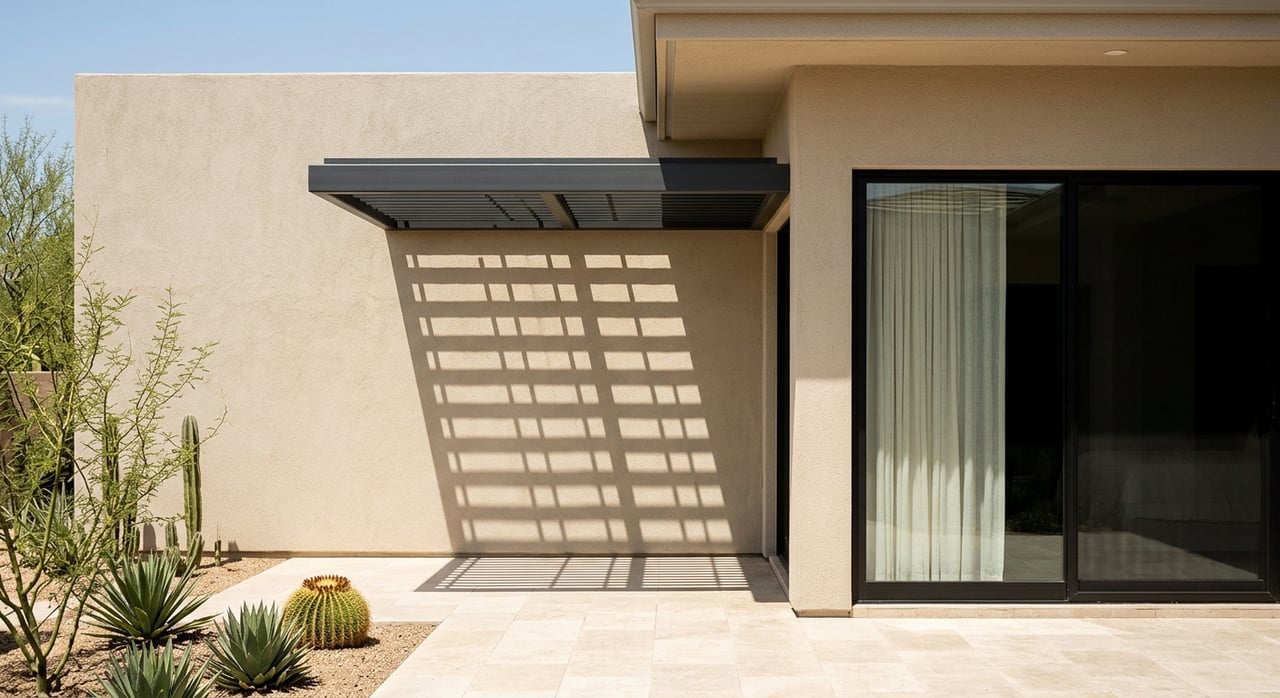
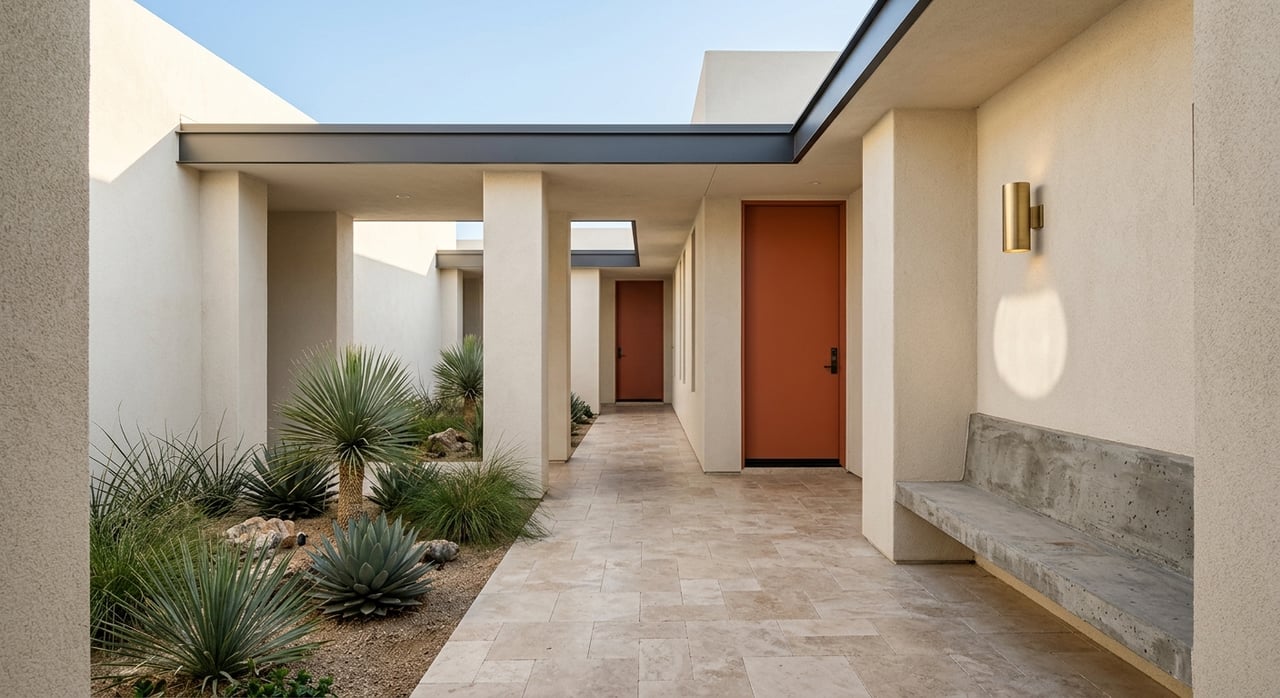
Many homes use low‑slope or flat roofs with generous eaves to shade walls and glass. The clean horizontal lines reinforce the modern aesthetic and help manage sun.
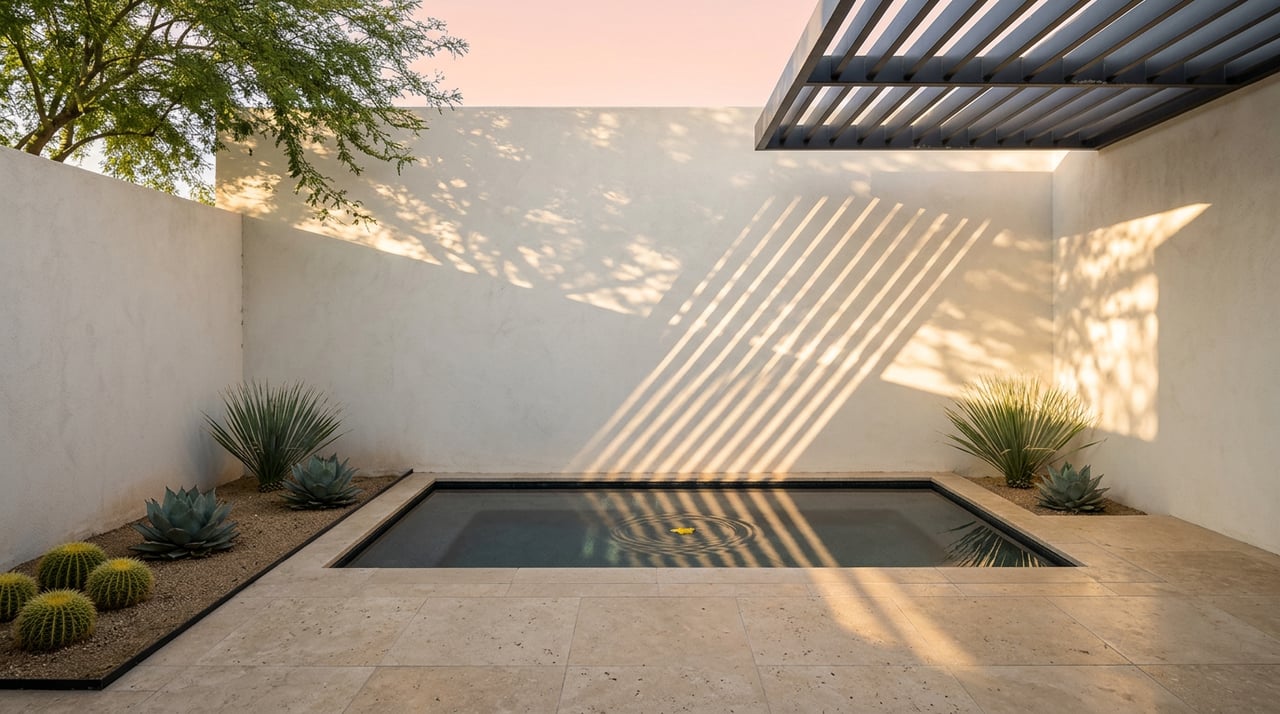
You will also see folded planes or long cantilevers that extend indoor lines to the outside. These emphasize outdoor rooms and make patios and pools feel like part of the living space.
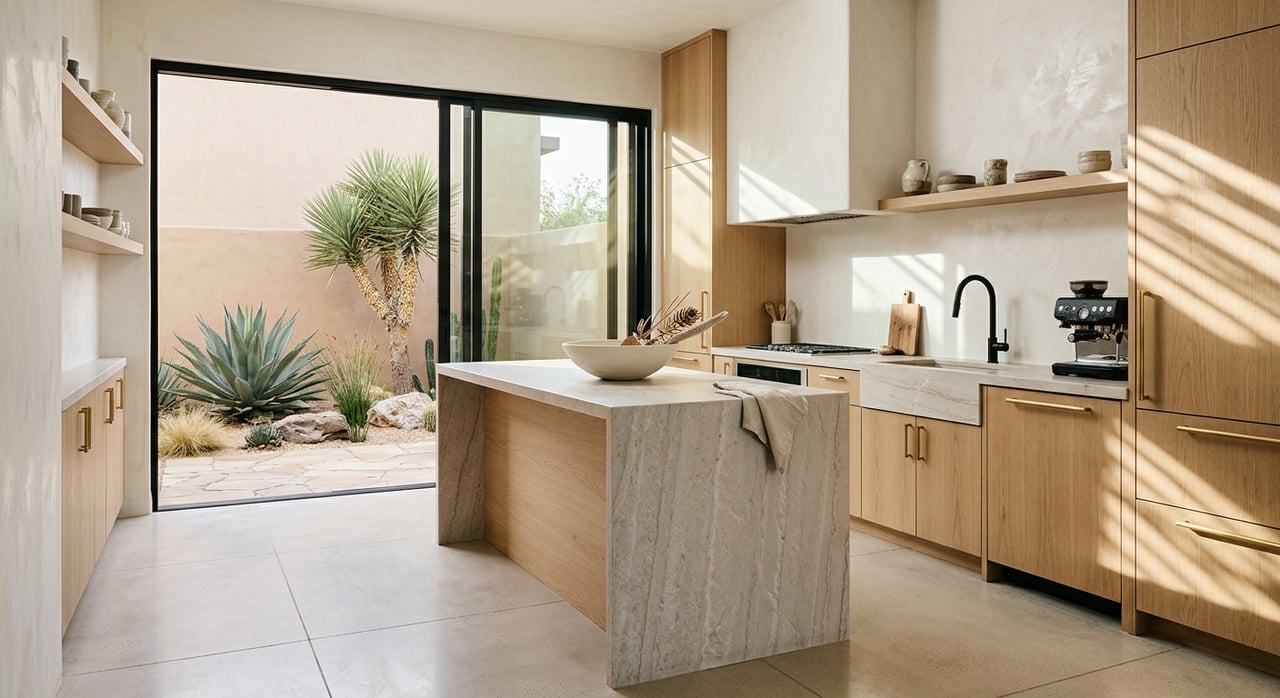
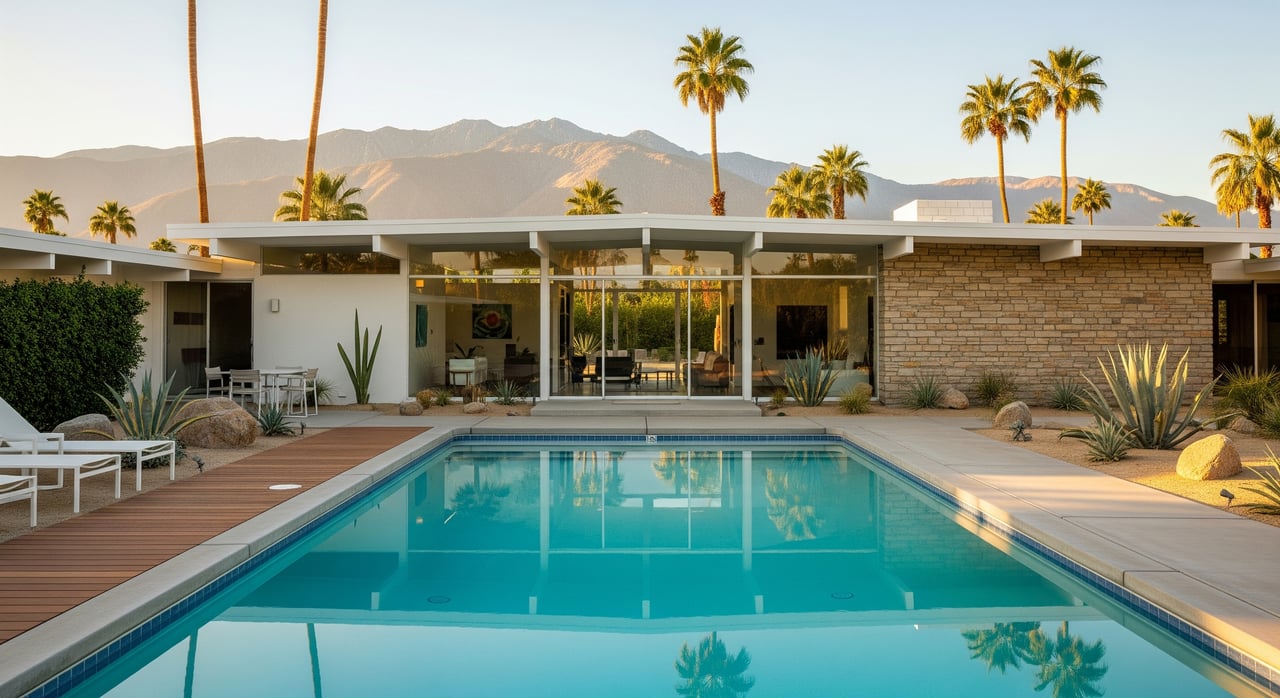
Palm Springs mid‑century homes often feature floor‑to‑ceiling glass and wide sliding doors that open directly to patios and pools. Clerestory windows bring light deep into rooms while keeping privacy. Many façades use horizontal ribbon windows or bands of clerestories to keep the low, modern profile.
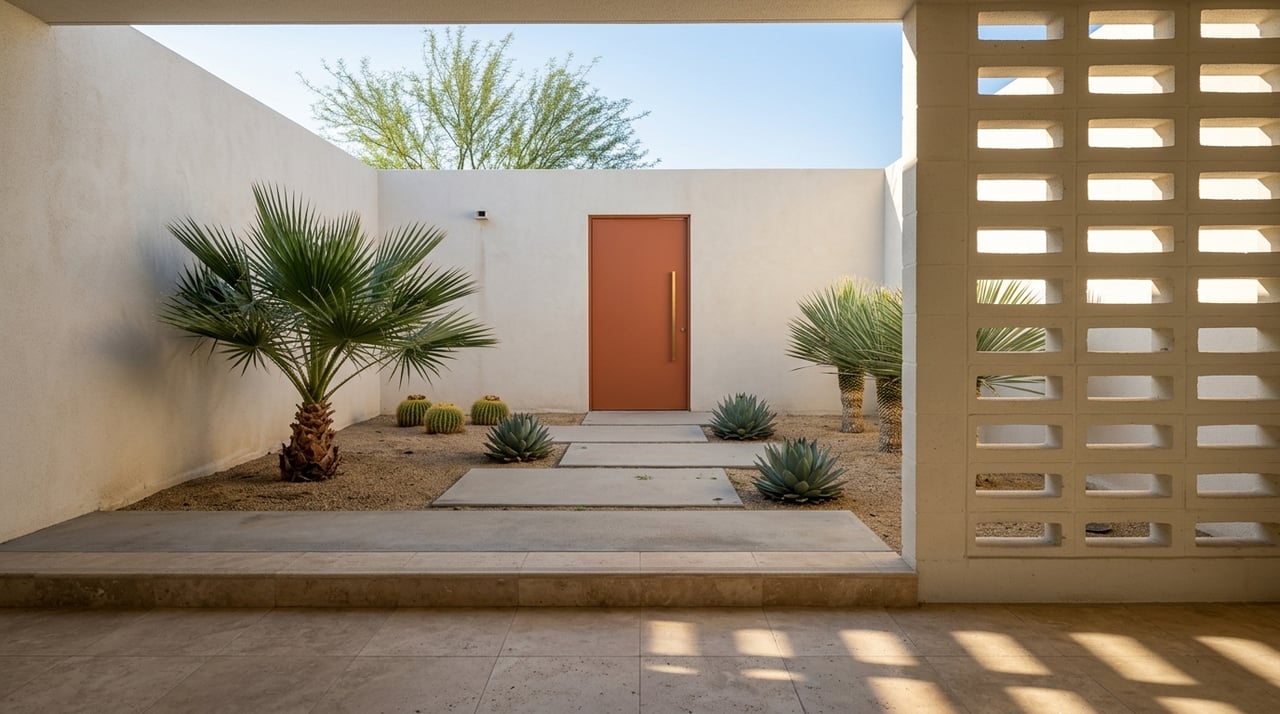
Breezeblock is a patterned concrete screen used for privacy walls, breezeways, and façade accents. It is an unmistakable Palm Springs hallmark. Many homes use post‑and‑beam construction that exposes the structure and keeps interiors open. Materials include stucco, concrete block, glass, wood fascias and beams, and in some architect‑designed homes, steel framing. Interiors often feature built‑ins, simple hardware, and terrazzo or tile floors.
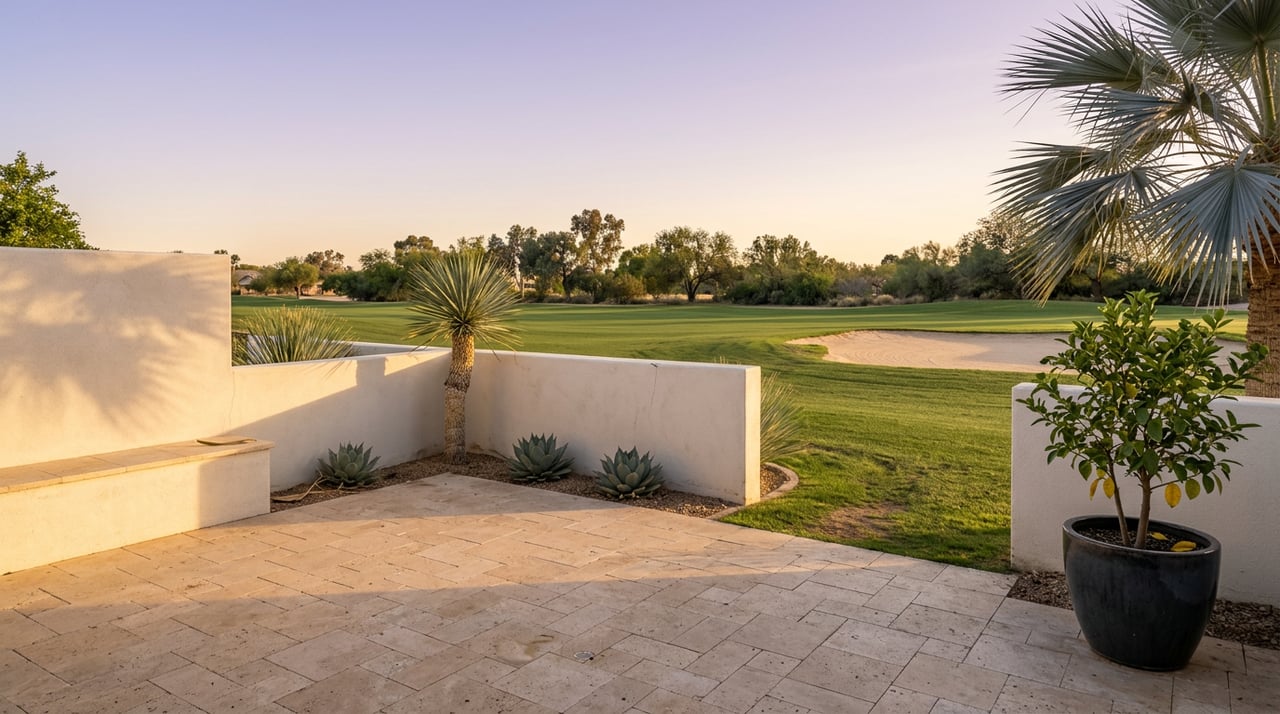
Alexander homes are single‑level, modestly sized, and standardized for efficient building. Typical cues include low roofs, clerestories, sliding glass doors to a private patio or pool, and a carport rather than a full garage. Layouts are simple, with open sightlines from living areas to the backyard. Landscaping often favors rock, low‑water plants, and hardscape that merges with the pool area.
Palm Springs has several areas known for mid‑century stock. You will find notable concentrations in Twin Palms, Movie Colony, Vista Las Palmas, Racquet Club Estates, The Mesa, and parts of south Palm Springs. Each neighborhood offers its own mix of tract homes and architect‑designed properties.
Original elements help confirm authenticity. Look for thin steel or original casement window frames, intact breezeblock, terrazzo or original tile, built‑in cabinetry and shelving, and an original roof profile. The strongest cue is an unbroken indoor‑outdoor link, such as sliding doors that open straight to the patio or pool.
Some updates reduce historic character. Thick replacement window frames, enclosed carports, removed breezeblock, reworked rooflines, second stories, or fully reconfigured open plans can blur a home’s original design.
Some new builds borrow the look with butterfly roofs and clerestories but are not historic. For preservation or valuation, authenticity depends on age, intact features, and builder or architect provenance.
Palm Springs design shines in the sun, but it also has specific care needs:
Authentic or well‑restored mid‑century homes, especially in well‑known neighborhoods, often command a premium. Buyers tend to value original details and the seamless indoor‑outdoor layout. Over‑modernization that erases character can reduce appeal for design‑minded buyers. At the same time, outdated systems can deter offers, so tasteful upgrades that keep the home’s DNA usually perform best.
Palm Springs has active preservation groups, a Historic Site program, and city staff who guide exterior changes to designated properties. If you plan a renovation, check with the City of Palm Springs planning and historic preservation staff early. California’s Mills Act can offer property tax benefits for qualifying historic properties, depending on local participation and designation. Verify eligibility with the city or local preservation organizations before you buy or remodel.
If you love mid‑century design, the right guidance helps you choose a home with character and long‑term value. As a long‑time Coachella Valley resident and local REALTOR with team support, I help you identify authentic features, plan smart upgrades, and navigate permits and preservation. Ready to evaluate a property or prep your home for market? Connect with Andrew Shouse to Schedule Your Free Market Consultation.
Stay up to date on the latest real estate trends.