Volatility, Seasonality & Pricing After the 2022 Peak
Weekly Newsletter Andrew Shouse February 4, 2026
Weekly Newsletter Andrew Shouse February 4, 2026
If the Coachella Valley housing market feels more volatile than it used to, you’re not imagining it.
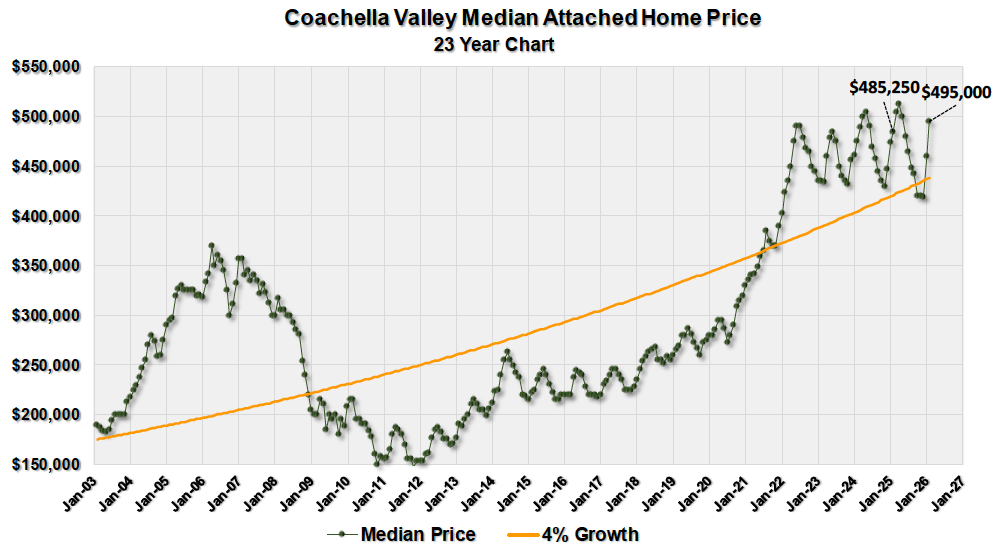
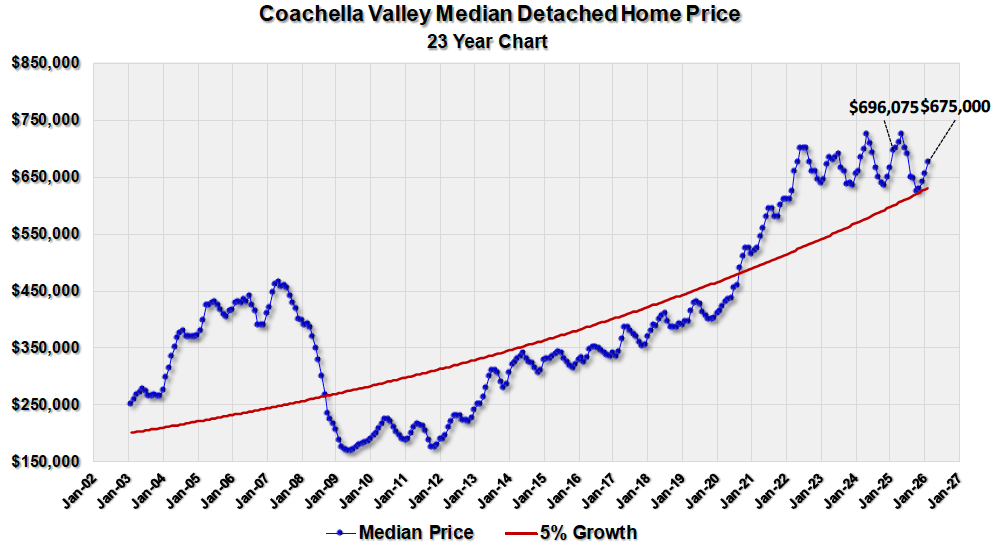
Prices are moving more noticeably month-to-month. Seasonal swings feel sharper. Attached home pricing, in particular, looks choppier than it did five or even ten years ago. And for homeowners watching charts since the mid-2022 peak, the question keeps coming up:
Is this instability — or is this just what a normal market actually looks like again?
The answer matters, because how you interpret volatility determines when you sell, when you buy, and how you price.
Mid-to-early 2022 wasn’t simply the top of a cycle. It was the end of an artificial environment.
From roughly 2020 through early 2022, the market was supported by forces that no longer exist:
Historically low mortgage rates
Excess liquidity
Urgency-driven, emotion-based demand
Severely constrained inventory
During that period, seasonality didn’t disappear — it was masked. Price movement looked smoother because demand overwhelmed timing.
Once rates rose and urgency faded, the market didn’t “break.”
It reconnected with reality.
The Coachella Valley has always been seasonal:
Winter and spring drive demand
Summer thins out buyers
Fall resets expectations
What’s changed since 2022 is that seasonality now shows up clearly in pricing.
Without cheap money smoothing demand:
Prices adjust faster
Buyer hesitation matters more
Sellers feel timing mistakes sooner
This is most obvious in attached homes, where:
Buyer demand is more discretionary
Investor and second-home decisions are more timing-sensitive
Smaller dollar changes create larger percentage swings
Detached homes follow the same pattern — just with less amplitude.
Before 2022, sellers could list almost anytime and expect success.
Today, inventory timing directly affects leverage.
What we consistently see:
Inventory builds in late winter and spring
Some listings come off the market in summer
Buyers who stay active in summer gain leverage
Inventory tightens again heading into fall and winter
This doesn’t mean summer is “bad.”
It means summer rewards preparation and pricing discipline.
Pre-2022 price charts look calm because:
Demand overwhelmed supply
Pricing errors were forgiven
Timing mattered less
Post-2022 charts look volatile because:
Supply and demand are negotiating again
Buyers have choices
Sellers must compete
📌 Key point:
Volatility does not mean instability.
It means prices are responding honestly to timing and behavior.
This is the most important takeaway for homeowners:
The market is forgiving early, but expensive late.
Spring demand is still present
Inventory is elevated but manageable
Buyers are active before summer pullback
Pricing correctly now avoids chasing later
Homes that enter the market well-prepared and properly priced are still selling efficiently. Homes that miss the mark often sit — and sitting leads to deeper seasonal adjustments.
Pricing strategy matters more than optimism.
This is no longer a market where waiting fixes mistakes.
Buyers should understand two things simultaneously (both can be true):
Inventory will likely decline over the summer
Leverage often increases during that same period
Why?
Fewer buyers stay active
Some sellers become more motivated
Negotiation improves even as options narrow
For disciplined buyers, summer and shoulder seasons are often where value is created, not lost.
For short-term rental owners and investors, volatility is often misunderstood.
Seasonal price softness creates better entry points
Negotiation improves cash-on-cash returns
Stabilizing prices paired with steady rents can improve yield
The mistake is waiting for clarity.
The opportunity is pricing into volatility, not avoiding it.
Selling into spring demand still matters
Waiting into low-activity periods increases pricing pressure
Strong operating history matters more than ever
Buyers are underwriting more carefully now.
Clean numbers and realistic pricing win.
The post-2022 market isn’t more fragile — it’s more transparent.
Seasonality didn’t suddenly appear.
It stopped being hidden.
For homeowners, buyers, and STR investors, that transparency is actually an advantage — if you understand how to use it.
The market no longer rewards hope.
It rewards preparation, timing, and strategy.
If you want to understand how volatility and seasonality apply specifically to your property or investment goals, that’s where real clarity begins.
Contact me for a FREE pricing & timing strategy review
Stay up to date on the latest real estate trends.

Weekly Newsletter

Weekly Newsletter
What Design, Photography, and Perception Tell Us About Long-Term Value


Market Update